


There is money in waste.
Every time a truck hauls a load away, every time material crosses a transfer station scale, and every time something is processed or buried, money changes hands.
Haulers need to be paid. Transfer stations need to operate. Landfills cost money. Local governments need to manage complex systems that protect public health and the environment.
Those services are necessary.
But there is a question we don't ask often enough:
What happens when our economic system is better built to manage waste than to prevent it?
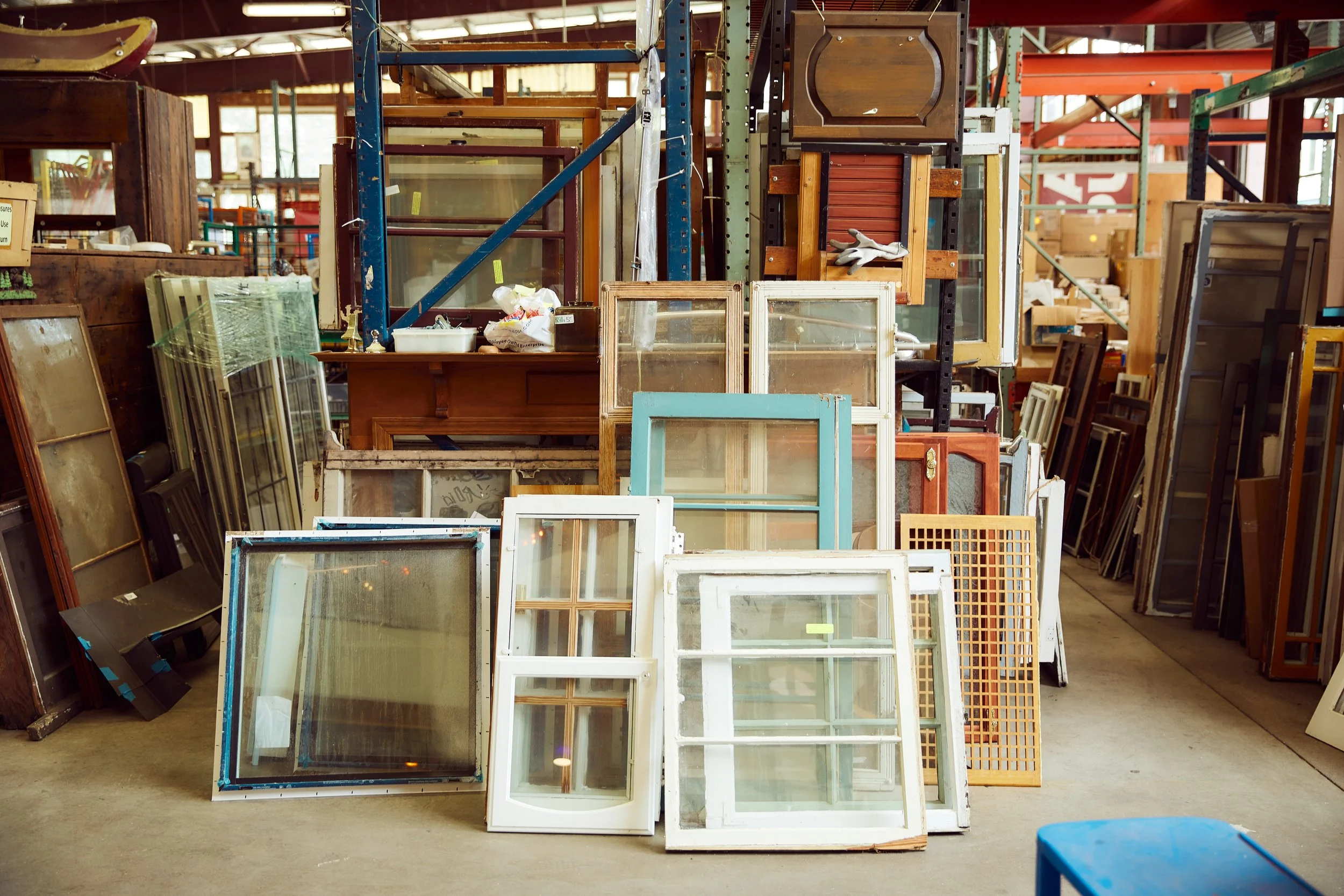
Because a door in a dumpster has a cost.
A door kept in use has value.
And those two paths are supported very differently.
We have built an impressive system for throwing things away.
Think about the infrastructure behind disposal.
Bins. Trucks. Drivers. Transfer stations. Processing facilities. Landfills. Contracts. Franchises. Tipping fees. Disposal fees. Administrative fees.
An entire economic ecosystem activates once we decide something is waste.
Now compare that with what happens when someone wants to keep that same material in circulation.
It has to be carefully removed. Sorted. Stored. Transported. Cleaned. Repaired. Remanufactured. Marketed. Sold or given away. Sometimes it becomes something entirely new.
All of that takes people, skills, space, equipment, transportation, technology, and capital.
In other words, reuse isn't the absence of economic activity. It is a different kind of economic activity.
Who benefits when we throw something away?
It's a deliberately provocative question.
And the answer isn't simply "the garbage company."
Workers earn livelihoods. Businesses provide necessary services. Governments fund programs. Communities depend on reliable sanitation systems. Disposal fees can support environmental initiatives and help pay for the real costs of managing what we discard.
The problem isn't that disposal costs money.
The problem is that we've built powerful economic systems around the back end of a product's life while leaving enormous economic potential sitting upstream.
We have gotten very good at asking:
Where should this go when we're done with it?
We need to get much better at asking:
What else could this become—and who could make a living making that happen?
What happens to the revenue if we actually succeed?
This is where the circular-economy conversation gets harder.
If we generate less waste, fewer tons cross the scales. If fewer tons cross the scales, some disposal-based revenue declines.
That's real.
But the answer can't be to preserve waste because we've become financially dependent on it.
The answer is to replace an economy built around disposal with one built around value recovery.
And there are plenty of places to start.
Green jobs and workforce development
What if materials headed toward disposal instead became the raw material for jobs?
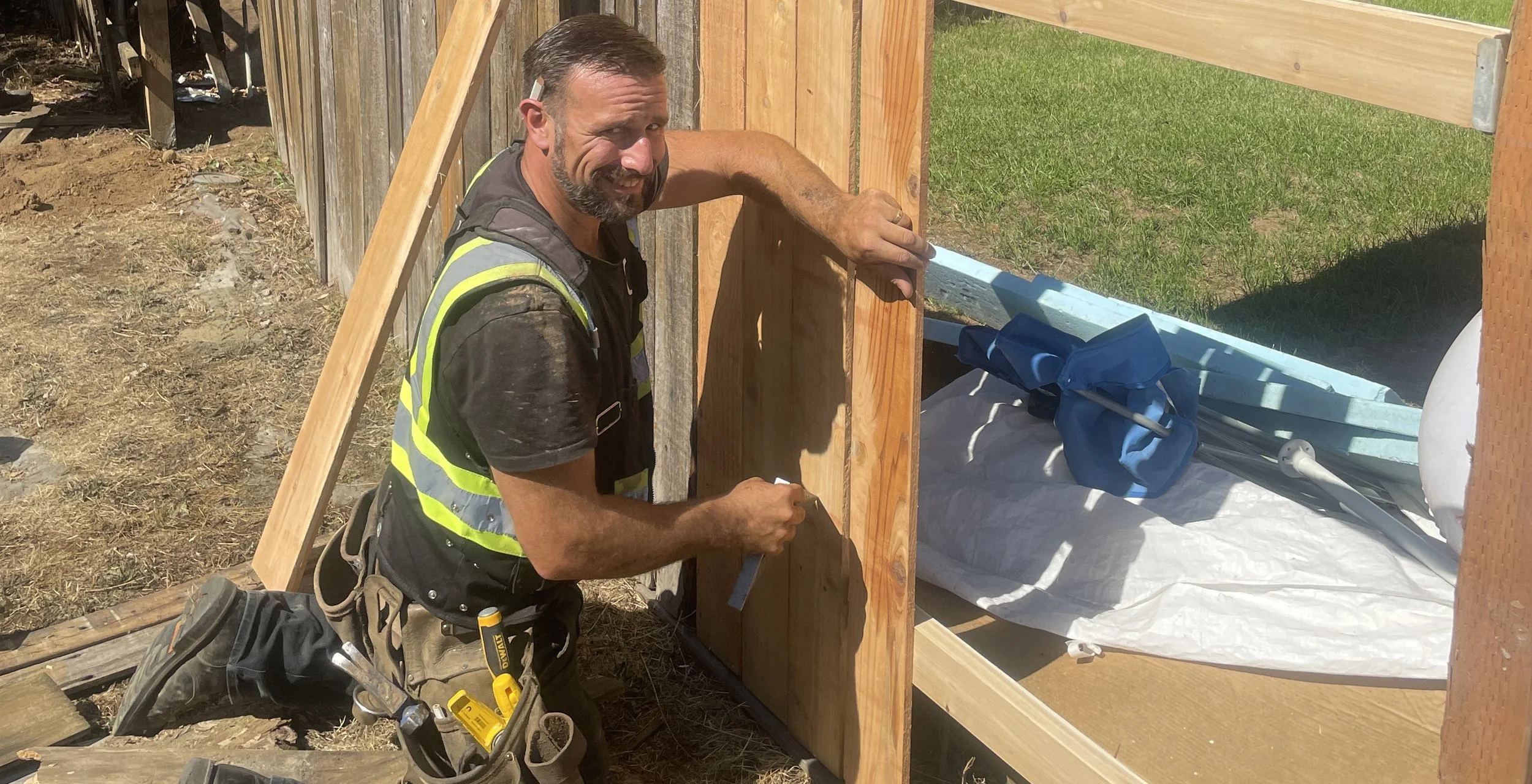
Deconstruction crews. Material recovery specialists. Repair technicians. Carpenters. Drivers. Warehouse workers. Retailers. Designers. Fabricators. Instructors.
We could create training pathways that teach people how to safely deconstruct buildings, recover valuable materials, repair products, fabricate with reclaimed materials, and move those goods back into the marketplace.
Workforce dollars don't have to be separate from climate dollars.
A recovered board can become both a climate solution and a paycheck.
Reuse manufacturing
Salvaged material doesn't always need to be resold in the same form.
What if reclaimed lumber became furniture, cabinetry, flooring, wall treatments, garden structures, or standardized building products?
What if surplus materials became inputs for small-scale manufacturing?
What if materials currently worth almost nothing at the point of disposal became locally manufactured products worth substantially more?
That's not simply diversion.
That's value creation.
Circular business incubation
There are entrepreneurs all over our community who can see possibility in materials other people overlook.
Furniture makers. Artists. Repair businesses. Designers. Contractors. Upcyclers. Product innovators.
What if reuse facilities also became incubators for those businesses?
Give entrepreneurs access to affordable materials, shared tools, workspace, technical assistance, small-business support, and customers.
A material that once generated a disposal fee could instead help launch a business.
Deconstruction and material recovery
Before a building comes down, there is an enormous inventory of potential economic value sitting inside it.
Doors. Fixtures. Lumber. Cabinets. Hardware. Appliances. Architectural materials.
Recovering those materials requires more labor than simply demolishing a structure—and that's precisely the point.
Labor is not always a cost to eliminate. Sometimes it is a job to create.
A stronger deconstruction economy could support contractors, salvage operations, transportation providers, material marketplaces, retailers, and skilled workers while recovering resources that already exist in our communities.
Repair and refurbishment
Our economy has become remarkably efficient at replacing things.
It could become much better at fixing them.
Repair businesses, tool libraries, refurbishment operations, community workshops, and skilled trades can extend the useful life of products while creating local economic activity that can't easily be outsourced.
Instead of shipping money out of the community to manufacture another product somewhere else, we can pay someone here to keep the one we already have working.
Reuse marketplaces
There is also enormous opportunity in making recovered materials easier to find and buy.
Regional material exchanges. Online inventories. Contractor-to-contractor marketplaces. Commercial surplus exchanges. Salvaged-material specifications for architects and designers.
The easier we make it to match supply with demand, the more valuable recovered materials become.
And that creates transactions, businesses, jobs, and tax revenue without requiring another ton of material to become garbage.
This is the pivot.
Imagine the economic chain today:
Buy → Use → Discard → Haul → Process → Dispose
Now imagine another:
Use → Recover → Train → Repair → Remanufacture → Sell → Reuse
Both create economic activity.
Both require infrastructure.
Both employ people.
But only one requires us to keep producing enormous quantities of waste to keep the system moving.
That distinction matters.
Because the circular economy isn't asking communities to choose between the environment and the economy.
It's asking us to recognize that the materials flowing through our communities are already economic assets.
We just tend to stop seeing their value too soon.
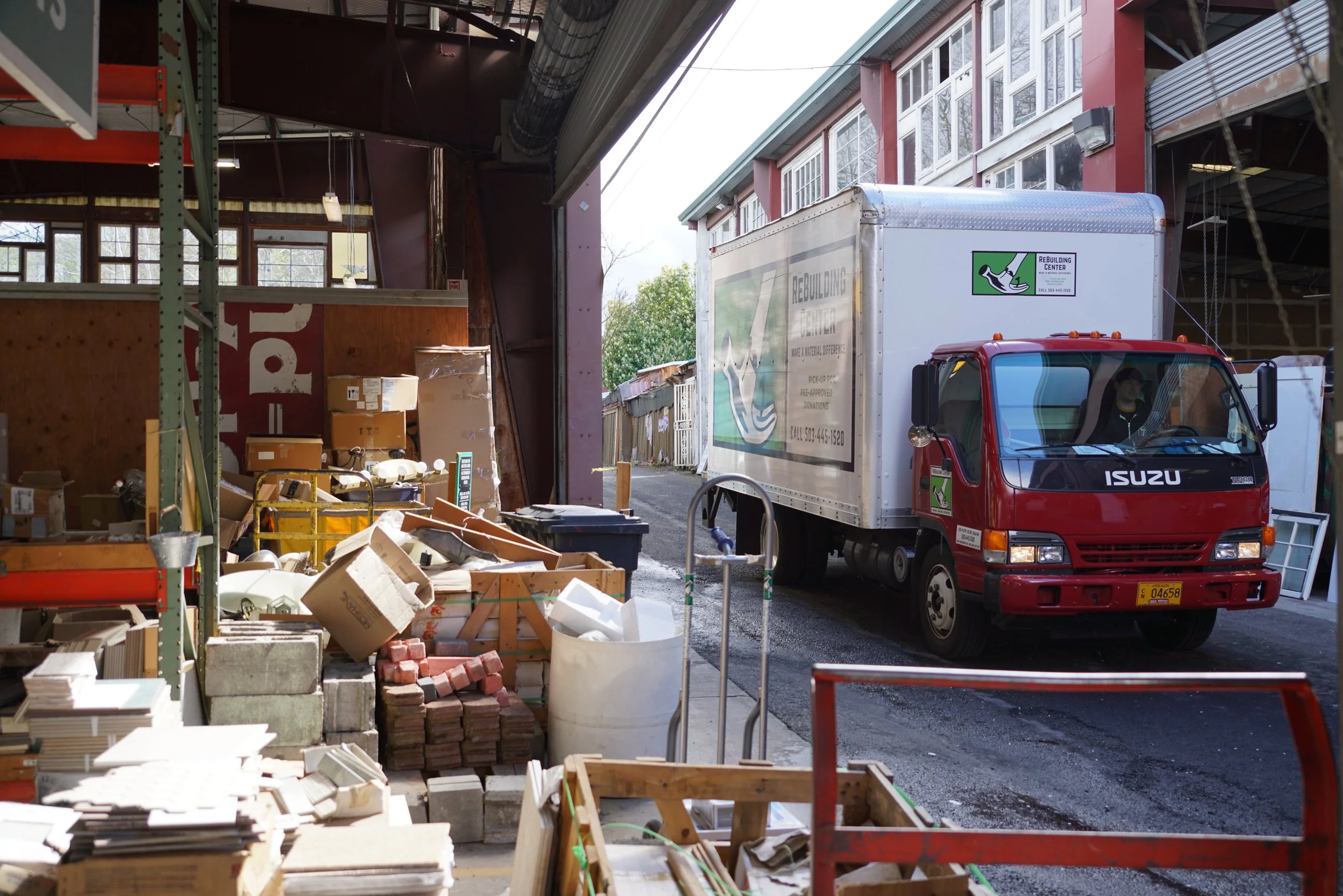
Last year, ReBuilding Center kept 1,124 tons of material in circulation through more than 28,000 purchases.
But imagine what becomes possible when reuse infrastructure grows beyond resale.
Training.
Manufacturing.
Repair.
Business incubation.
Deconstruction.
Entrepreneurship.
Skilled trades.
Affordable materials.
Local jobs.
That's not a waste program.
That's an economic development strategy hiding inside our waste stream.
So perhaps the question isn't:
How do we replace disposal revenue if we create less waste?
The better question may be:
How much economic value are we throwing away along with the materials?
Stop calling it waste.
Start treating it like an asset.