
Every good find at the ReBuilding Center has a backstory.
Before a tool lands in someone’s hands or a door finds its second life, it has already moved through a series of decisions—by donors, drivers, and salvage handlers—each shaping what reuse looks like in practice.
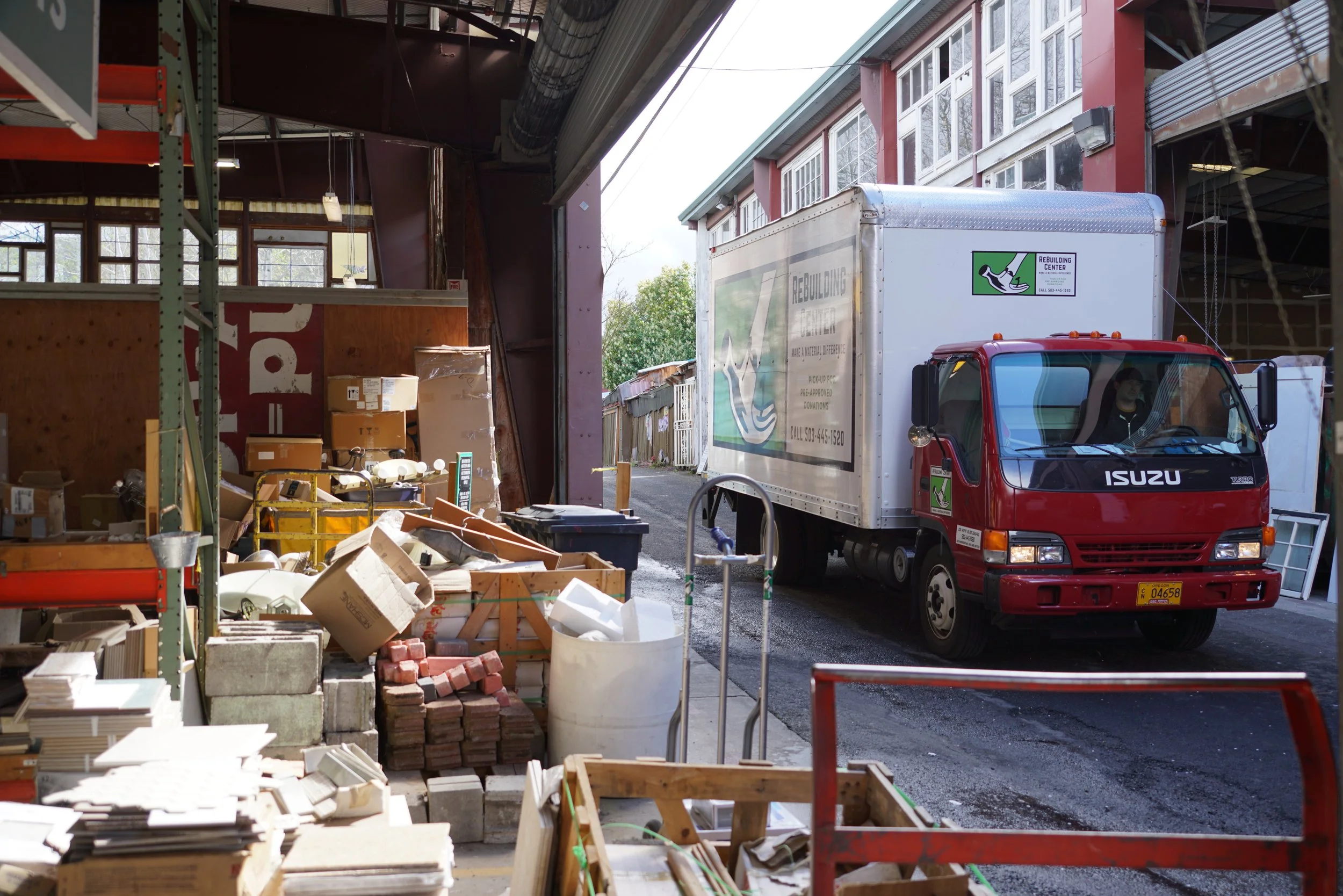
Reuse begins in the community, when someone chooses to donate instead of discard. From there, materials arrive at RBC—either dropped off on site or picked up by our drivers—and enter a carefully managed flow that turns generosity into shared resources.
On the Road and at the Dock: Alberto & Elijah
When donations need a lift, Alberto and Elijah are the ones who make it happen.
They’re out across Portland picking up materials from homes, job sites, and businesses, navigating tight driveways, weather, and loading zones—often while making quick calls about logistics, safety, and timing. They’re also part of what happens back at RBC, unloading donations and keeping materials moving into the system.
They see patterns most of us miss. They know which days tend to bring in the good stuff. And they’ve noticed something else too: regular customers who know the rhythm of our operation well enough to linger near the unloading area, casually checking out what’s coming in next.
It’s one of the clearest signs that reuse isn’t just practical—it’s exciting.
Where Everything Gets Decided: LJ, Junior & Nicole
Once donations arrive, they land with LJ, Junior, and Nicole, our salvage handlers and the people who touch, sort, assess, price, and place every single item that comes into the store.
They make hundreds of small decisions every day—about quality, usability, safety, and value—that determine what makes it to the floor and how accessible it will be to the community.
If you ask them what moves fastest, the answer comes without hesitation: tools.
Tools don’t sit around. They’re picked up quickly by homeowners, renters, artists, tradespeople, and DIYers who rely on reclaimed materials to get real work done affordably. That insight doesn’t come from reports—it comes from standing on the floor, watching what people reach for first.
This work requires experience, judgment, and attention. It’s part logistics, part curation, and part intuition—and it’s essential to making reuse actually function.
Why This Matters
Frontline staff don’t just keep things moving—they shape the entire reuse experience.
They see what people donate.
They know what the community is looking for.
They understand how materials flow through the system—and where things can get stuck or shine.
As we kick off 2026, we want to start by naming that reality.
Reuse isn’t automatic.
Reuse isn’t effortless.
Reuse is built—donation by donation, decision by decision, shelf by shelf.
And it’s built by people who know the work from the inside out.