
Rebuilding the Relationship Between People, Materials, and Value
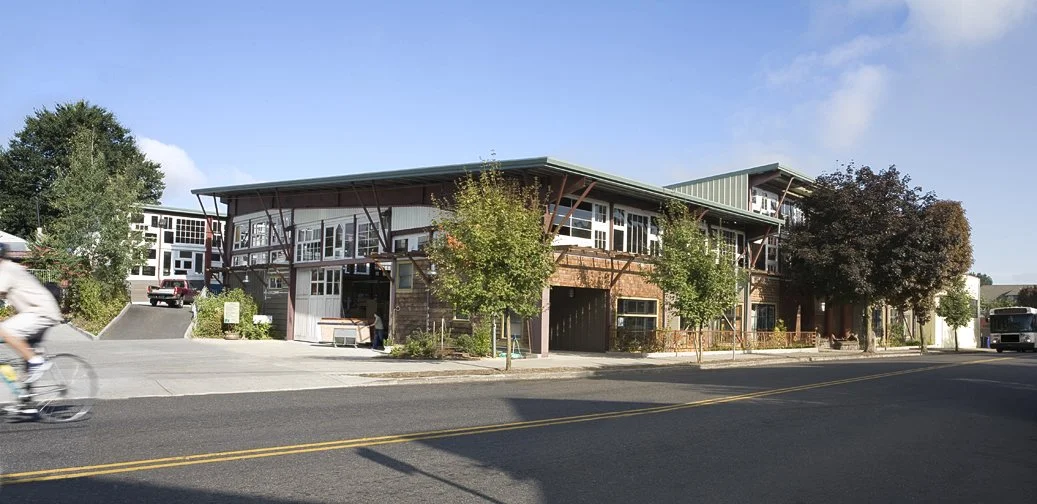
Walk into the lumberyard at the ReBuilding Center in Portland and you’ll see what most people have already decided is worthless.
Cabinets pulled from remodels.
Doors from tear downs.
Tools someone stopped using.
But that’s not what they are.
That’s just the last decision that was made about them.
As a society, we have built an entire system around a simple pattern.
Take. Make. Use. Dispose.
It is efficient. It is normalized. And over time, it teaches us something subtle but powerful.
That value is temporary.
That usefulness expires.
That the natural end of anything is the landfill.
But that is not a law of nature.
It is a learned behavior.
At the ReBuilding Center, we interrupt that pattern every day.
We rebuild the relationship between people, materials, and value.
A cabinet becomes a kitchen again.
A piece of lumber becomes a finished project.
A broken item becomes someone’s first repair.
And in that moment, something shifts.
People stop seeing themselves as consumers.
They start seeing themselves as capable.
This work is not just about materials.
It is about what happens when people realize they can fix, build, and shape the world around them.
That is the crux.
When people regain that sense of capability, value changes.
It is no longer dictated by price or convenience.
It is created through skill, access, and imagination.
And this is why people are paying attention.
Leaders, cities, and organizations from across the country and around the world are coming to the ReBuilding Center to study what this looks like in practice.
Not a pilot.
Not a theory.
A working model.
A model for how materials can be diverted, recirculated, and put back to use at scale.
A model for how communities can build skills, reduce costs, and reduce waste at the same time.
A model that proves reuse is not fringe. It is infrastructure.
So the question is no longer whether this works.
It is how far it can go.
The answer is not complicated.
It happens in small decisions made every day.
To repair instead of replace.
To pass something on instead of throwing it away.
To learn instead of outsource.
Because nothing is waste until we decide it is.
And if we change that decision, we do more than keep materials in motion.
We build systems that are more resilient, more accessible, and more sustainable by design.
We redefine what and who holds value in the first place.